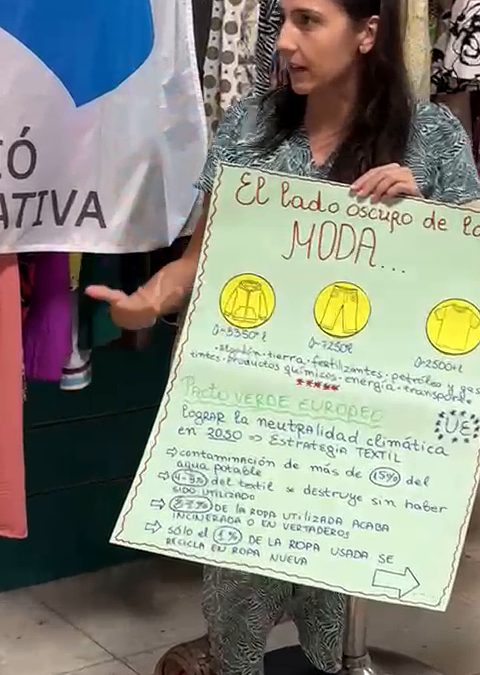
On 24 September, as part of the Youth Green Compass project and the World Environmental Week , Cultura Creativa organised a Green Fashion Day at GURU, a second-hand shop in the heart of Alicante, which is also one of the green points on our city map. Twelve participants joined the evening to rethink the way we consume fashion, discover the environmental impact of the textile industry and explore more sustainable alternatives.
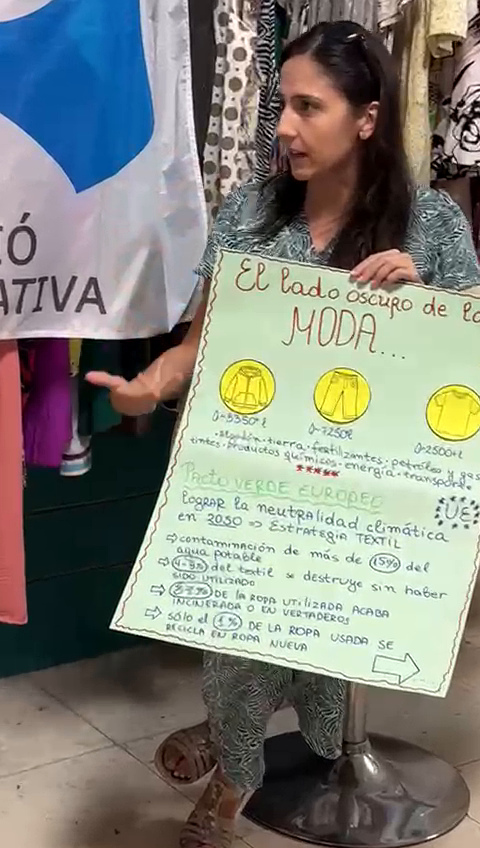 The activity aimed to raise awareness of the effects of fast fashion, from water consumption and pollution to textile waste, and to encourage participants to reflect on their own clothing habits. It also sought to help them recognise greenwashing in the fashion industry and to explore more responsible options, such as buying less, repairing, reusing, exchanging and choosing second-hand clothes.
The Hidden Cost of Our Clothes
The event began with a short presentation of facts and figures about the fashion industry, covering its use of water and natural resources, pollution and the growing problem of textile waste. One example that stood out was that producing a single pair of jeans can require more than 7,000 litres of water.
Participants were then introduced to the Youth Green Compass project and to the role of the European Union in making the textile sector more sustainable. The session covered the European Green Deal and related EU strategies on textiles and sustainable consumption, along with concrete examples of recent measures, such as new requirements on textile information and labelling.
From Global Impact to Personal Choices
The activity then became more interactive. Participants were asked to list the clothes they had bought over the previous three months, estimate how much they had spent and think about the resources needed to produce them. Above all, they reflected on why they had made those purchases: out of real need, because of a low price or promotion, because of trends or social pressure, or simply on impulse. This exercise helped them connect the global impact of the fashion industry with their own everyday choices.
One Person’s Trash, Another’s Treasure
Next, participants took part in a clothes and objects exchange, bringing along items they no longer needed. Swapping them with others showed that something one person considers useless can be valuable to someone else. The exchange was directly linked to the Trash to Trend Challenge of the City Compass App, which encourages young people to give unwanted items a new life instead of throwing them away.
The Story of GURU
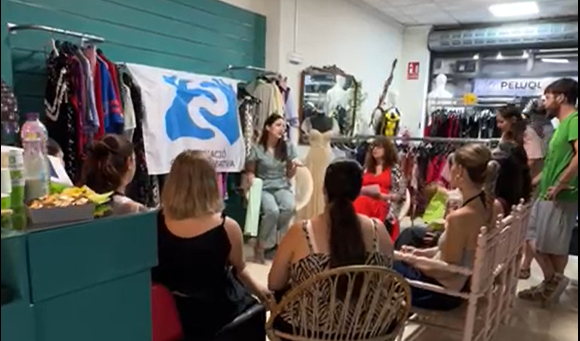
The evening ended with the story of GURU itself. The shop’s owner shared her personal relationship with fashion, explained how and where she finds second-hand clothes and shoes, and talked about the journey of her small local business. She also spoke openly about the challenges she faces and her vision for the future, offering participants a first-hand look at what it means to promote responsible consumption through second-hand fashion.
Looking Ahead
Beyond the knowledge gained, the Green Fashion Day brought together a small community of people with shared values and a common vision. Participants decided to stay in touch and organise similar initiatives in the future, showing that a conversation about sustainable fashion can be the starting point for further action.
Youth Green Compass is a project co-funded by the European Union. Views and opinions expressed are however those of the author(s) only and do not necessarily reflect those of the European Union or EACEA. Neither the European Union nor the granting authority can be held responsible for them.

Comentarios recientes